Plastic pollution has become one of the most serious environmental challenges worldwide. From overflowing landfills to polluted oceans, single-use plastic bags are a major contributor to this growing crisis. As awareness increases, individuals and businesses are actively searching for sustainable alternatives—and reusable bags have emerged as one of the most effective solutions.
🌍 The Global Plastic Waste Problem
Every year, billions of plastic bags are used and discarded within minutes. These bags are non-biodegradable, meaning they can take hundreds of years to decompose. During this time, they break down into microplastics, contaminating soil, water, and even entering the food chain.
Plastic waste not only harms wildlife but also affects human health and contributes to environmental degradation on a massive scale.
♻️ What Are Reusable Bags?
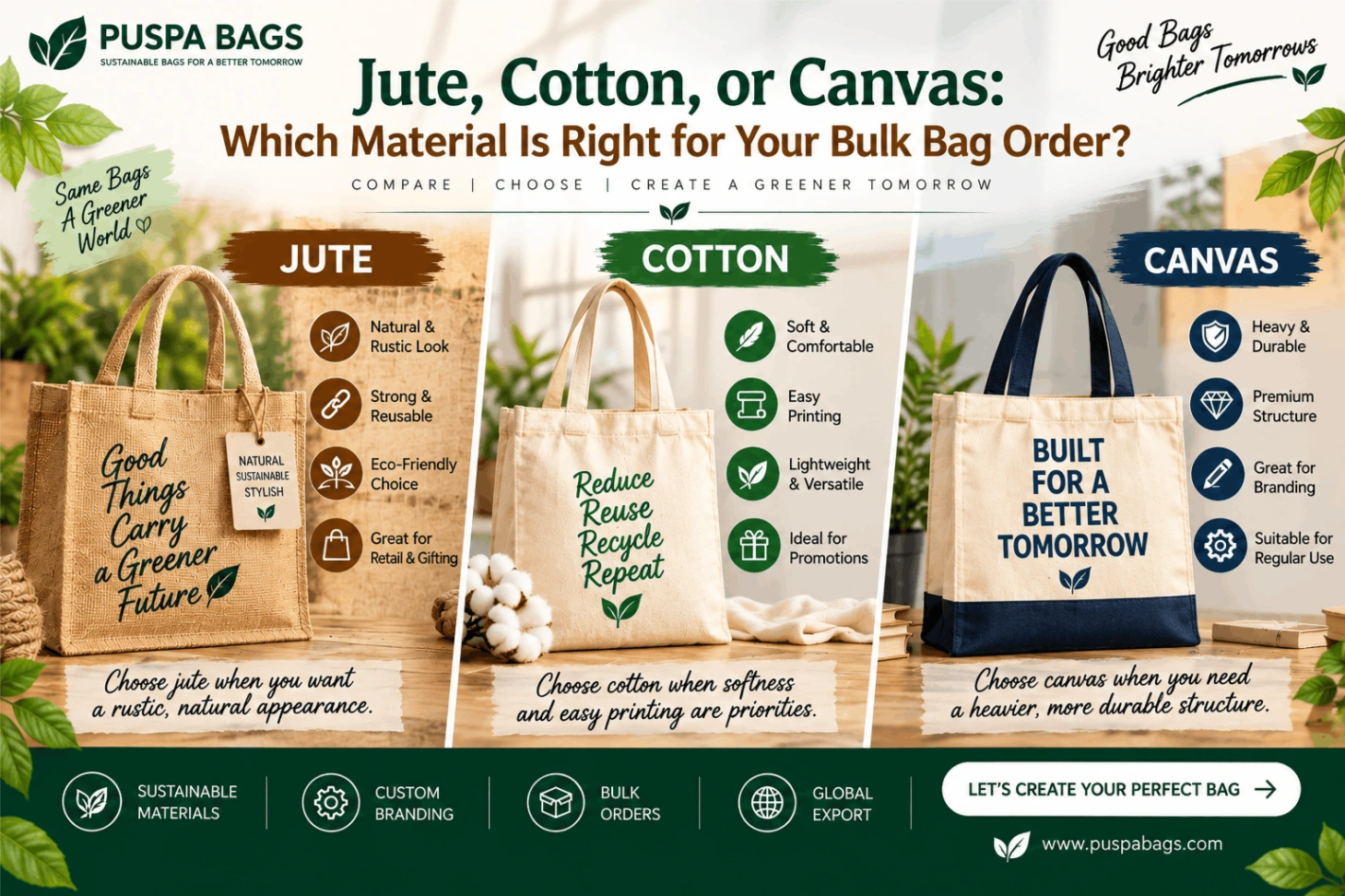
Reusable bags are durable, long-lasting bags made from materials like cotton, jute, canvas, or recycled fabrics. Unlike single-use plastic bags, they are designed to be used multiple times, making them a sustainable and cost-effective alternative.
Common types include:
- Tote bags
- Shopping bags
- Canvas bags
- Jute & Juco bags
🌱 How Reusable Bags Reduce Plastic Waste
1. Minimizing Single-Use Plastic Consumption
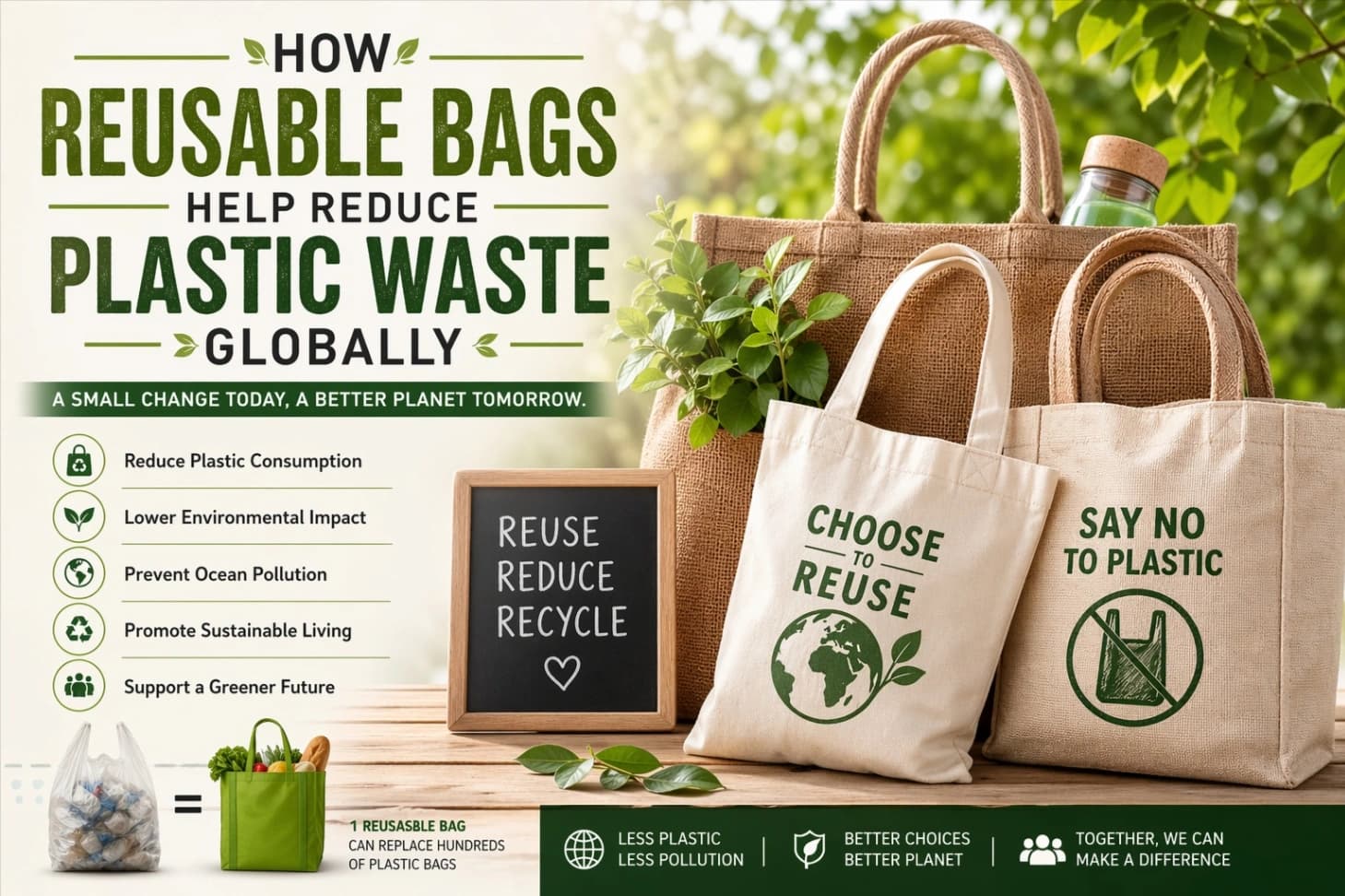
Each reusable bag can replace hundreds—even thousands—of plastic bags over its lifetime. This directly reduces the demand for plastic production.
2. Lower Environmental Impact
Reusable bags are often made from natural or recyclable materials, which decompose faster and have a significantly lower environmental footprint compared to plastic.
3. Reducing Ocean Pollution
Plastic bags frequently end up in oceans, harming marine life. Switching to reusable bags helps decrease plastic waste entering waterways.
4. Promoting Sustainable Habits
Using reusable bags encourages eco-conscious behavior. It inspires individuals and businesses to adopt more sustainable practices in daily life.
5. Supporting Global Sustainability Goals
Many countries have implemented plastic bans or restrictions. Reusable bags help align with these regulations and support global efforts to reduce waste.
🛍️ Benefits for Businesses and Consumers
Reusable bags are not just environmentally friendly—they also offer practical and economic advantages:
✔ Cost-effective over time
✔ Strong and durable for heavy loads
✔ Ideal for branding and promotions
✔ Enhances brand image as eco-conscious
✔ Meets growing consumer demand for sustainability
Businesses that adopt reusable packaging often gain a competitive edge while contributing to a cleaner planet.
📈 Growing Demand for Eco-Friendly Bags
The global shift toward sustainability is driving demand for reusable bags across industries. Retailers, supermarkets, and brands are replacing plastic packaging with eco-friendly alternatives to meet customer expectations and environmental standards.
Consumers today prefer brands that demonstrate responsibility toward the environment, making reusable bags both a smart and strategic choice.
🌏 Small Change, Big Impact
Switching to reusable bags may seem like a small step, but its impact is powerful. If more people make this simple change, the reduction in plastic waste can be massive on a global scale.
By choosing reusable bags, you are not just carrying your items—you are contributing to a cleaner, healthier, and more sustainable world.
❓Frequently Asked Questions (FAQs)
1. How many plastic bags can one reusable bag replace?
A single reusable bag can replace hundreds to thousands of plastic bags depending on usage.
2. Are reusable bags really eco-friendly?
Yes, especially when used multiple times. Materials like cotton, jute, and canvas are biodegradable and sustainable.
3. Which material is best for reusable bags?
Jute, canvas, and Juco are among the best options due to their durability, strength, and eco-friendliness.
4. Can businesses benefit from reusable bags?
Absolutely. They improve brand image, reduce packaging costs, and attract eco-conscious customers.
5. Why are plastic bags harmful to the environment?
Plastic bags take hundreds of years to decompose, pollute ecosystems, and harm wildlife.
✅ Final Thoughts
Reusable bags are more than just an alternative—they are a necessity in today’s world. As plastic pollution continues to rise, adopting eco-friendly solutions like reusable bags is essential for both individuals and businesses.
Making the switch today can lead to a better tomorrow—for our planet and future generations. 🌱